Recycled material pens are writing instruments manufactured from post-consumer or post-industrial waste, most commonly RPET (recycled PET bottles), wheat straw biopolymer, bamboo, or reclaimed paper, and they are used in CSR campaigns because they convert a routine giveaway into a verifiable sustainability action. For Singapore companies preparing climate-related disclosures or running employee engagement drives, these pens function as low-cost, high-touch proof points. The catch: the pen itself does very little if the wider campaign cannot explain what was recycled, where, and by whom.
Key Takeaways
- Recycled material pens convert standard promo spend into a measurable CSR data point, useful for sustainability reporting under SGX Listing Rule 711A.
- RPET, wheat straw, and bamboo each tell a different eco story; matching the material to your CSR narrative matters more than the pen itself.
- Branding choices (laser engraving versus pad printing) can either reinforce or quietly contradict the sustainability message.
- The lowest unit price rarely produces the best CSR outcome. Material provenance and end-of-life behaviour decide whether the gift earns goodwill or scepticism.
- Pens distributed at CSR events should be paired with a short story (one line on the packaging is enough) explaining what was recycled and why.
The Data Behind Sustainable Promotional Products
The 2024 ASI Global Ad Impressions Study found that writing instruments generate roughly 3,000 impressions per item across their useful life, at one of the lowest costs-per-impression in the promotional category. Layer recycled materials on top and the impression carries a sustainability cue every time the pen is used. The study is available at asicentral.com. NielsenIQ’s 2023 sustainability tracker, separately, reported that 78% of global consumers say a sustainable lifestyle is important to them, which is the audience your CSR pen is meeting at the desk.
What most people miss is that the recipient often remembers the material before the logo. That reverses the usual promotional logic and is worth designing around.
The Three Materials That Matter in 2026
RPET Pens
RPET pens use barrels moulded from recycled PET bottles, typically with a stated bottle-equivalent (“made from 1.5 plastic bottles”). They suit campaigns themed around ocean plastic, waste diversion, or circular economy reporting. RPET is durable, prints cleanly, and pairs well with standard refills. For mixed-material giveaways, see this overview of eco-friendly pens for corporate gifts.
Wheat Straw Pens
Wheat straw pens blend agricultural waste fibres with a small percentage of PP plastic. The barrel has a visible flecked texture that signals “natural” without explanation needed. These work well for agritech, F&B, and ESG-themed events. They are not fully biodegradable, which is worth stating honestly in your CSR collateral to avoid greenwashing risk.
Bamboo and Plant Fibre Pens
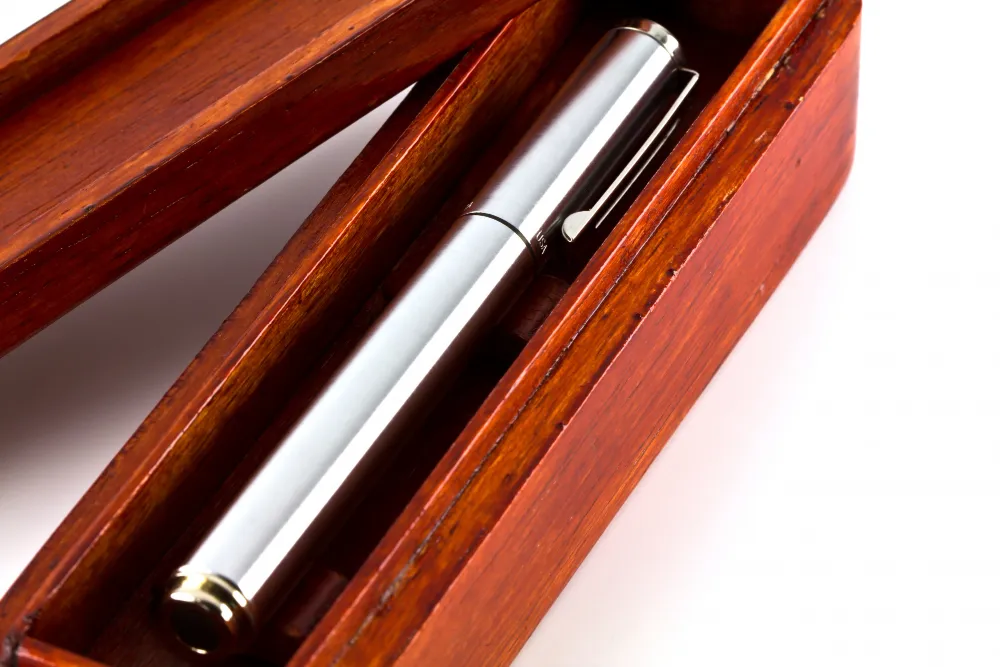
Bamboo pens lean executive. The grain finishes beautifully and ages well, which makes them a sensible choice for senior stakeholder gifts or board offsites. A deeper look at the material trade-offs sits in this guide to the benefits of bamboo pens. For higher-tier recipients, pairing bamboo with a refillable mechanism elevates the gesture; the executive gift pen sets page covers the format.
Eco Message Alignment: Why the Pen Has To Match the Story
In our experience working with Singapore firms on year-end CSR drives, the most common misstep is choosing a recycled pen with no narrative connection to the campaign. A bank running a financial literacy programme handing out RPET pens makes sense only if the bank can point to its own plastic reduction commitment. Without that link, the pen reads as a generic “green” purchase, and the audience sees through it.
A simple alignment check: write one sentence that connects the material to your CSR pillar. If you cannot, change the pen or change the pillar.
Branding Without Undermining the Eco Story
Pad printing with solvent-based inks on a wheat straw pen sends a mixed signal. Laser engraving is the cleaner choice for natural materials because it removes ink from the equation entirely. The mechanics are covered in this explainer on how laser engraving works on metal pens; the same principle applies to bamboo and certain bioplastic blends. For the broader decision framework on pen selection across categories, the ultimate guide to corporate pens is a useful starting point, and the full eco range is browsable under eco-friendly pens.
Conclusion
Recycled material pens are not a sustainability strategy. They are a touchpoint that either reinforces a real one or exposes its absence. Pick the material that fits the story your CSR report is already telling, brand it with a process that does not contradict the message, and write one sentence of provenance on the packaging. Done well, a pen that cost under five dollars does more for stakeholder trust than a glossy report nobody opens.
FAQ
Are recycled material pens actually better for the environment than standard plastic pens?
Yes, with caveats. RPET and wheat straw pens reduce virgin plastic demand and divert waste from landfill, which is measurable. They are not zero-impact, since manufacturing and shipping still emit. The honest framing for CSR is “lower footprint,” not “carbon neutral.”
What is the difference between RPET pens and biodegradable pens?
RPET pens reuse existing PET plastic and remain plastic at end of life. Biodegradable pens use materials like PLA or wheat straw composites that break down under specific industrial composting conditions. Most wheat straw pens are partially biodegradable, not fully, so claims should be precise.
Can recycled pens be used for executive-level gifting in Singapore?
Yes, particularly bamboo and high-grade RPET formats with metal clips and refillable mechanisms. The material reads as intentional rather than budget-driven when paired with quality engraving and proper packaging. Avoid the lightest plastic shells for senior recipients.
How should we brand recycled pens without contradicting the eco message?
Laser engraving is the safest option because it uses no ink or solvents. If pad printing is necessary for colour, request water-based or low-VOC inks and disclose the choice in your CSR collateral. Consistency between material and process matters more than the logo size.
What minimum order quantity is realistic for recycled material pens in Singapore?
Most local suppliers run from 100 to 300 units for stock recycled pens with custom branding. Fully customised barrels or bespoke colours typically start at 1,000 units. For mixed CSR campaigns, ordering across two or three material types in smaller batches often delivers better narrative variety than a single large run.