Key Takeaways
- Upcycle material refers to discarded or waste items transformed into products of higher value or quality, not just repurposed at the same level.
- Upcycling differs fundamentally from recycling: it adds value rather than breaking materials down.
- For businesses, upcycled merchandise signals genuine sustainability commitment to clients and employees alike.
- Common upcycle materials include reclaimed fabric, industrial offcuts, leather scraps, and decommissioned banners.
- Choosing upcycled corporate gifts is one of the most tangible ways companies reduce procurement-related waste.
So, What Exactly Is Upcycle Material?
Upcycle material is any waste, surplus, or discarded resource that gets transformed into something with greater value than its original form. Think factory fabric offcuts turned into premium tote bags, or decommissioned truck tarps stitched into durable wallets. The defining feature is value addition, not just reuse.
This matters because a lot of people confuse upcycling with general recycling. They are not the same process, and understanding the difference shapes how businesses make smarter, more credible sustainability decisions.
The Numbers Behind the Upcycling Movement
The global upcycling market has been gaining serious traction. According to a report by Grand View Research, “the global sustainable packaging market, which includes upcycled materials, was valued at over USD 340 billion in 2023 and is projected to grow at a CAGR of around 7% through 2030.“
What this tells us from a business lens: sustainability is no longer a fringe concern. Procurement teams, HR managers, and CEOs are all facing increasing pressure from employees and stakeholders to make choices that reflect environmental responsibility.
Common Types of Upcycle Materials Used in Products
Not all upcycled materials are created equal. Here is what shows up most frequently in quality upcycled products, particularly in the corporate merchandise space:
Reclaimed Fabric and Textile Offcuts Garment factories generate enormous quantities of fabric scraps that would otherwise end up in landfill. These offcuts are often sorted by quality and reworked into pouches, bags, or accessories.
Leather Scraps Leather manufacturing produces irregular trimmings that are too small for standard production but perfectly sized for cardholders, keychains, or notebook covers. The texture and durability of these pieces are often indistinguishable from virgin leather goods.
Decommissioned Banners and Tarpaulins Event banners and PVC tarpaulins have a surprisingly short operational life. Once retired, they can be cleaned and cut into sleek, weather-resistant bags and accessories. Several sustainable brands have built their entire product line around this single material stream.
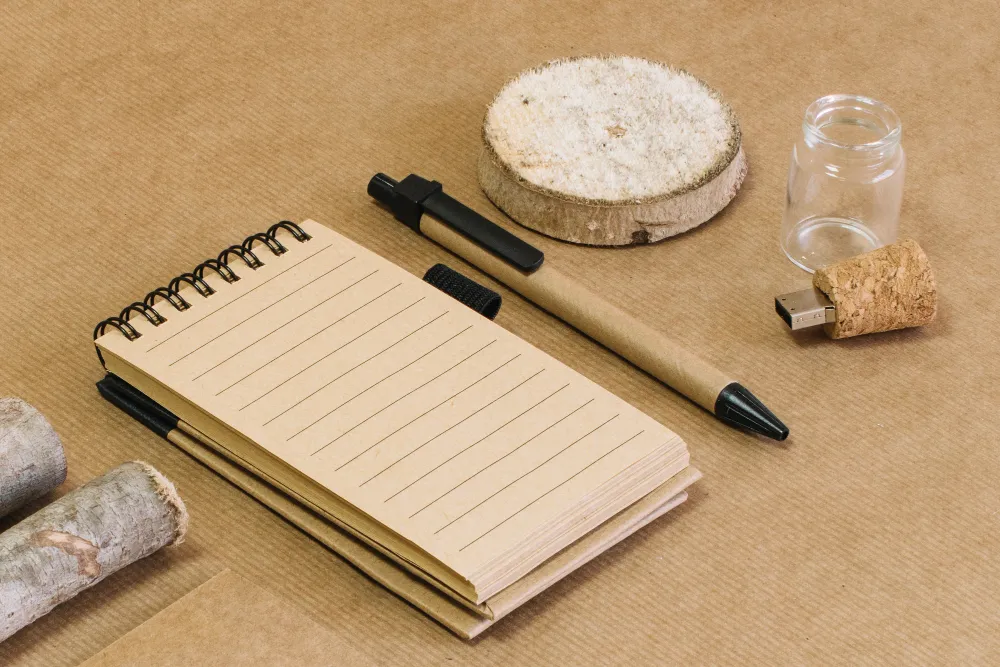
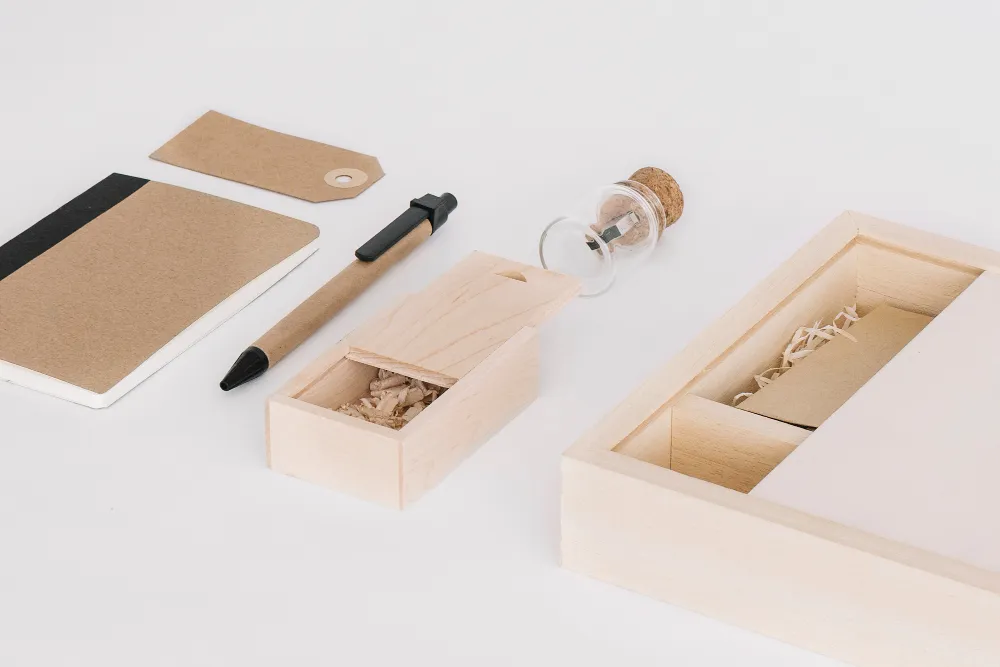
Industrial Packaging and Paper Waste Corrugated cardboard, kraft paper, and even wine corks find second lives as stationery, protective packaging inserts, or decorative elements in gift boxes.
Why Upcycle Material Beats Conventional Material for Corporate Use
Here is something most procurement guides miss: the story behind the material is as valuable as the product itself.
When a company gifts a cardholder made from reclaimed leather offcuts, it gives the recipient something to talk about. That provenance, knowing where the material came from and why it was rescued, turns a standard gift into a conversation about values.
We have observed that branded merchandise using upcycle materials consistently generates more positive feedback in corporate settings than equivalent conventional gifts at similar price points. The perceived thoughtfulness factor is simply higher.
Beyond perception, there are practical advantages:
- Reduced environmental liability in procurement reporting
- Alignment with ESG frameworks that many Singapore-listed companies now follow
- Differentiation from generic, mass-produced corporate gifting
If you want to understand the broader business case, the breakdown of the benefits of using upcycled materials covers the cost, impact, and brand equity angles in detail.
Upcycling vs. Recycling: Why the Distinction Matters
A common sticking point for businesses drafting sustainability policies is conflating these two terms. Recycling breaks a material down to its base components so it can be reformed, often at a lower quality. Upcycling skips that degradation step entirely.
A plastic bottle that gets shredded and reformed into polyester fibre is recycled. That same bottle, cut and sealed into a functional pencil case without any chemical processing, is upcycled.
The energy cost difference is significant. Upcycling generally requires far less industrial processing, which means a smaller carbon footprint per product. For companies tracking Scope 3 emissions, this distinction is worth documenting.
For a more detailed comparison, the upcycle vs recycle breakdown is a useful reference when briefing internal teams or sustainability consultants.
What to Look for When Sourcing Upcycled Products
If you are sourcing upcycled merchandise for your company, here are the questions worth asking any supplier:
- Where does the raw material come from? A credible upcycled product has a traceable waste stream.
- What percentage of the product is upcycled material? Some products blend upcycled with virgin materials. Neither is wrong, but the ratio matters for sustainability reporting.
- Is there third-party verification? Certifications like GRS (Global Recycled Standard) add credibility to claims.
- What happens to production offcuts? A truly sustainability-focused manufacturer minimises secondary waste too.
For businesses exploring ready-made options, upcycled merchandise from Switts offers a practical starting point with traceable materials and corporate customisation options.
Making Upcycle Material Work for Your Organisation
Adopting upcycled materials in corporate procurement does not require a complete overhaul. Start with a single category, corporate gifts, event merchandise, or branded stationery, and evaluate supplier quality and employee response before scaling.
The shift is less about perfection and more about direction. Companies that start asking the right questions about where their materials come from are already ahead of organisations that treat sustainability as a checkbox exercise.
Upcycle material is not a trend. It is a practical, verifiable way to reduce procurement waste while producing something people actually want to keep.
FAQ
What does “upcycle material” mean?
Upcycle material refers to waste or surplus resources that are transformed into a new product of equal or greater value without breaking them down chemically or mechanically. Unlike recycling, upcycling preserves the material’s original character while giving it a new, often more useful, purpose.
What are common examples of upcycled materials in products?
Frequent examples include leather manufacturing offcuts used in accessories, reclaimed fabric scraps turned into bags, decommissioned PVC banners made into wallets, and industrial paper waste repurposed into packaging or stationery. These materials come from existing waste streams rather than new resource extraction.
Is upcycling better than recycling for the environment?
Generally, yes, from an energy-use perspective. Upcycling skips the energy-intensive breakdown and reformation process that recycling requires. This results in a lower carbon footprint per finished product. However, recycling handles a much wider range of materials, so both methods serve complementary roles in waste reduction.
Can small businesses or SMEs use upcycled materials for corporate gifts?
Absolutely. Many suppliers, particularly in Singapore, offer minimum order quantities suited to SMEs. Upcycled corporate gifts do not require large budgets. A well-made cardholder or tote bag from reclaimed material often costs comparably to conventional alternatives while carrying a stronger brand story.
How do I verify that a product is genuinely made from upcycled material?
Ask the supplier for the material’s source, the percentage of upcycled content, and any third-party certifications such as the Global Recycled Standard (GRS). Legitimate upcycled products have traceable origins. Be cautious of vague claims like “eco-friendly” without supporting documentation.