Key Takeaways
- Stainless steel, bamboo, wheat straw, and glass are the four most practical sustainable materials for office lunch boxes, each with distinct trade-offs in weight, durability, and safety.
- Material choice directly affects long-term cost, health impact, and environmental footprint not all “eco” labels mean the same thing.
- For corporate gifting or bulk office procurement, stainless steel offers the best balance of durability, food safety, and brand longevity.
- Wheat straw is the lightest and most affordable entry point, but has a shorter lifespan than metal or glass options.
- Knowing which material suits your daily routine commute type, meal prep habits, dishwasher access is more useful than following trends.
An eco friendly lunch box is a reusable food container made from sustainably sourced or low-impact materials like stainless steel, bamboo, wheat straw, or glass, designed to replace single-use plastic containers over the long term. For office workers and business owners navigating daily meals, the right material is not just an environmental statement it is a practical decision that affects food safety, maintenance, and cost over months of use.
What the Research Says About Plastic and the Shift to Sustainable Alternatives
The scale of the problem puts the material choice into sharp context. According to a 2023 report by the OECD, “global plastic waste has doubled over the past two decades, with food packaging accounting for a significant portion of that figure. The report found that less than 10% of plastic ever produced has been recycled.“
Closer to home in Southeast Asia, Singapore generates approximately 1.41 million tonnes of waste annually, with plastic packaging making up a persistent share. These numbers explain why demand for durable, reusable alternatives is growing steadily among corporate employees and procurement managers alike.
What most people miss is that switching to an eco friendly lunch box is not just a consumer choice for companies doing bulk gifting or corporate wellness programs, it compounds into measurable waste reduction across hundreds of employees.
Breaking Down the Four Main Sustainable Materials
Stainless Steel
Stainless steel (food-grade 304 or 18/8) is the most durable material available for lunch boxes. It does not leach chemicals, handles both hot and cold food without warping, and can last 10 to 15 years with basic care.
What we’ve observed in testing: double-wall stainless steel containers retain heat for up to 4 hours without any insulation bag, which matters for office workers who eat lunch at their desks rather than in a cafeteria.
The trade-off is weight. A standard stainless steel bento box runs 300 to 500 grams empty, which adds up in a daily commute bag. It is also not microwave-safe.
For corporate gifting contexts, stainless steel boxes hold up to laser engraving cleanly, making them a strong long-term branded item. Browse curated eco-friendly lunch box options for corporate gifting to see how this material performs across different formats.
Bamboo
Bamboo composite lunch boxes are made from bamboo fibre mixed with a binder resin. The bamboo itself is a rapidly renewable resource it regrows in 3 to 5 years compared to decades for hardwood.
The appeal is aesthetic and tactile. Bamboo boxes look premium, feel natural in the hand, and are lighter than stainless steel. They work well for dry foods and room-temperature meals.
The nuance most guides skip: the binder resin used in many bamboo composites is often melamine-based. Melamine can release trace compounds when exposed to high heat or acidic foods. Look for certifications (FDA, LFGB) confirming food-grade safety before purchasing, especially for hot meal use.
Wheat Straw
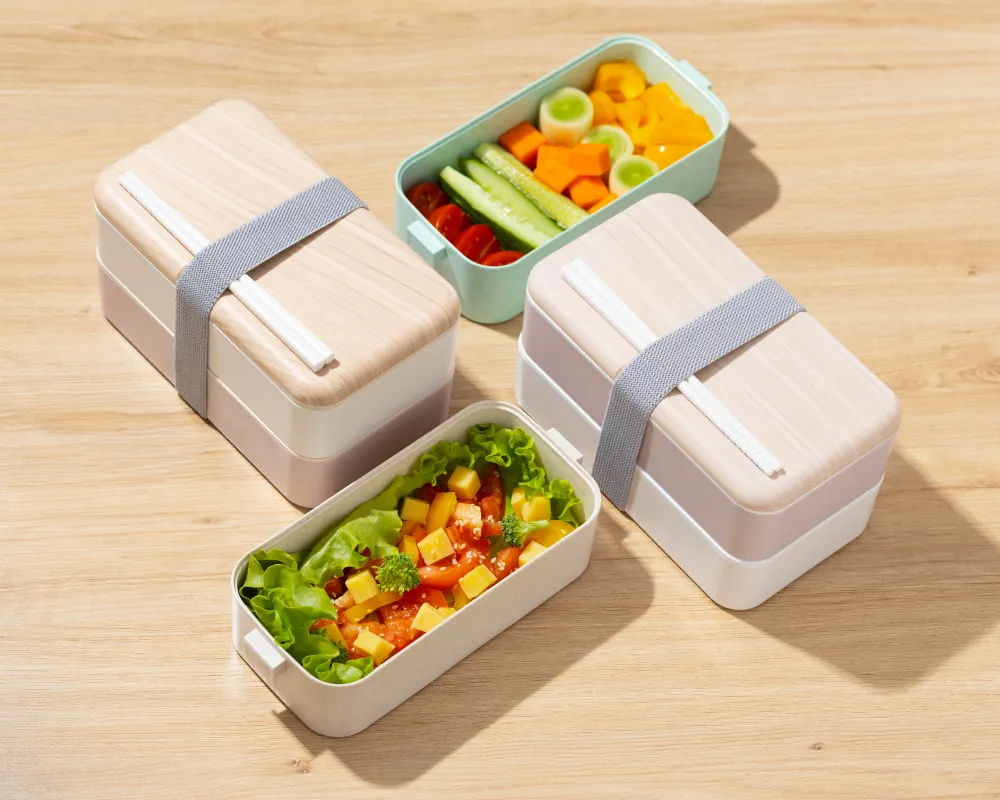
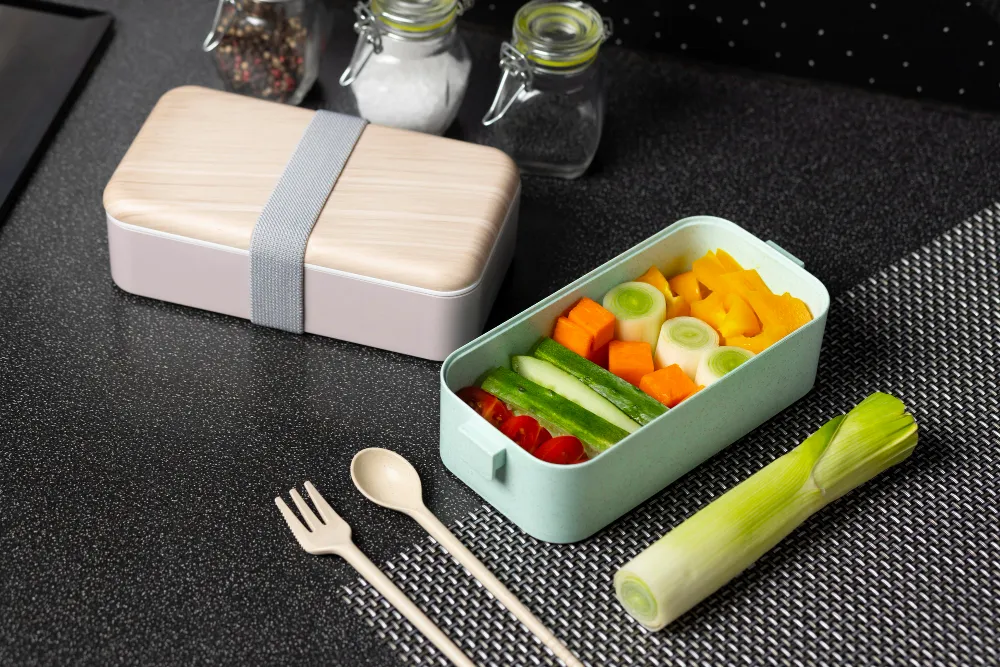
Wheat straw plastic is made from the leftover stalks of wheat harvested for grain a byproduct that would otherwise be burned. It produces a lightweight, BPA-free plastic-like material that feels familiar to anyone used to conventional lunch boxes.
It is the most affordable sustainable option and the easiest to adopt for someone making their first switch away from single-use containers. The downside is longevity: wheat straw containers typically last 2 to 3 years before showing wear, compared to 10-plus years for stainless steel.
For employees who want a low-barrier entry into sustainable habits, wheat straw works well. For companies investing in long-term branded corporate gifts, the shorter lifespan reduces its value proposition.
Glass
Borosilicate glass lunch boxes are the safest option for food contact. Glass is completely non-reactive, does not absorb odours or flavours, and is fully microwave and oven-safe a genuine advantage for office workers reheating meals at their desks.
The obvious limitation is fragility and weight. A glass container with a silicone sleeve and locking lid can weigh 600 grams or more, making it impractical for long commutes or travel.
Pro tip: glass works best for office workers with a fixed desk setup and short travel distances. If you carry lunch across multiple MRT stops daily, it is a liability more than an asset.
How to Choose the Right Material for Your Situation
The best material depends on your daily routine, not a universal ranking. Use this as a practical framework:
| Situation | Best Material |
|---|---|
| Long daily commute | Wheat straw or stainless steel |
| Desk lunch, microwave needed | Glass |
| Corporate gift or bulk order | Stainless steel |
| Eco-conscious, budget-first | Wheat straw |
| Premium aesthetic for gifting | Bamboo (with food-grade certification) |
| Hot soups and liquids | Double-wall stainless steel |
If you’re comparing formats and capacities before deciding, the guide on types of lunch boxes covers compartment structures, seal types, and size options across these materials in more detail.
Material Longevity and True Environmental Cost
A useful concept here is lifecycle impact: the total environmental cost of a product from production to disposal. A wheat straw box replaced every 2 years has a higher cumulative footprint than a stainless steel box used for 12 years, even if the stainless steel requires more energy to produce initially.
For business owners evaluating bulk procurement or employee wellness kits, this matters beyond optics. Choosing a material that actually lasts reduces repurchase frequency and keeps the sustainability commitment credible.
For a practical look at how these materials perform in actual office settings, the best lunch box for office use breaks down recommendations by work style and commute type.
Making the Switch: Practical Starting Points
If you are switching personally, start with one container that matches your most common meal type a single-compartment stainless steel box covers most lunches without overcomplicating the decision.
If you are sourcing for a team or corporate program, prioritise food-grade certified stainless steel or glass. These materials carry more credibility, last longer in daily use, and reflect better on the company’s environmental commitments when gifted to employees or clients.
The eco friendly lunch box category has matured enough that quality options exist at every price point. The key is matching the material to real-world use rather than choosing based on packaging claims alone.
FAQ
What is the safest material for an eco friendly lunch box?
Borosilicate glass and food-grade stainless steel (304 or 18/8) are the safest options. Both are non-reactive, do not leach chemicals into food, and are free from BPA and other plasticisers. For hot food or acidic meals specifically, these two materials are the most reliable choices.
Is bamboo really eco friendly for lunch boxes?
Bamboo as a raw material is highly renewable, but most bamboo lunch boxes use a melamine-based resin binder that raises food safety concerns at high temperatures. A bamboo box with certified food-grade materials is eco-friendly; an uncertified one may not be as safe as it appears.
How long does a stainless steel lunch box last?
A well-maintained stainless steel lunch box lasts 10 to 15 years in regular daily use. This lifespan is a key part of its environmental value the upfront manufacturing cost is offset by eliminating years of plastic container replacements.
Can wheat straw lunch boxes go in the microwave?
Most wheat straw lunch boxes are not recommended for microwave use. They are typically rated for food contact at room temperature or mildly warm conditions. Check the manufacturer’s specifications, but glass or ceramic remain the better options for reheating.
What eco friendly lunch box works best for a daily office commute in Singapore?
For Singapore’s MRT-heavy commutes, lightweight stainless steel or wheat straw containers strike the best balance of durability and portability. Double-wall stainless steel adds heat retention without requiring an insulation bag, which reduces total carry weight on a busy commute.