
Why Electronics Are Popular Corporate Gifts in Singapore

Electronics are popular corporate gifts because they’re genuinely useful. Unlike branded merchandise that ends up in a drawer, a quality gadget gets used daily which means your brand or your gesture of appreciation stays visible, relevant, and valued long after the occasion. In Singapore’s fast-paced, tech-forward business culture, giving someone a tool that improves their work or lifestyle communicates respect for how they actually spend their time. Key Takeaways What the Data Actually Says About Corporate Tech Gifts A 2023 study by the Promotional Products Association International (PPAI) found that “85% of recipients remember the company that gave them a tech-related promotional product, compared to 71% for non-tech items.” Meanwhile, a Deloitte survey on employee engagement found that meaningful, personalized recognition of which useful gifts are a key component can reduce voluntary staff turnover by up to 31%. These numbers reflect what we’ve observed firsthand in Singapore’s corporate sector: tech gifts don’t just make people happy in the moment. They build a longer association between the giver and genuine value. Singapore’s Tech Culture Makes Electronics the Natural Choice Singapore ranks consistently among Asia’s most digitally connected countries. With a smartphone penetration rate above 90% and a workforce that leans heavily on digital tools, giving someone a tech accessory here resonates differently than it might in other markets. It aligns with how people already see themselves professionally. What most people miss is the social dimension. In Singapore’s business culture, gifting carries weight. A thoughtful, functional gift signals that the giver paid attention not just to the occasion, but to who the recipient actually is. A wireless charger or a pair of noise-cancelling earbuds communicates something a box of chocolates simply cannot. Why Employees Value Gadgets More Than Traditional Gifts They Solve Real Daily Problems The best smart gadgets for daily use reduce friction in a workday. A portable Bluetooth speaker for the office pantry, an ergonomic mouse, a USB-C multi-port hub these aren’t luxuries. For hybrid workers especially, they’re practical necessities that most people quietly wish they had but don’t always buy for themselves. The Perceived Value Is Higher Here’s an interesting dynamic: people consistently overestimate the cost of electronics. A well-packaged wireless earphone set that retailed for S$60-80 often feels like a S$120 gift to the recipient. Presentation and functionality together create perceived value that few other gift categories can achieve at the same price point. They Last A branded pen or a corporate notebook has a shelf life measured in weeks. A decent pair of earbuds or a quality power bank gets used for two to three years. Every time someone reaches for that gift, there’s a positive association reinforced whether it’s with their employer, a client, or a business partner. Choosing the Right Electronics for Corporate Gifting Not all tech gifts land equally. A mismatch between the gift and the recipient’s role or lifestyle can feel tone-deaf. Here’s a practical framework: For C-suite executives and senior leadership: Premium wireless earphones, leather cable organizers, smart notebooks that sync to cloud platforms, or a compact portable monitor for travel. For office workers and general employees: Wireless charging pads, ergonomic accessories, USB hubs, or compact Bluetooth speakers. These are everyday-useful without feeling extravagant. For remote and hybrid employees: Webcam accessories, ring lights, noise-cancelling earbuds, or portable SSDs. These directly support how they work. One question that comes up often is whether budget options are worth considering at all. The honest answer is yes, with caveats. You can explore how cheap electronics hold up in real use before committing to bulk orders — because a gift that malfunctions reflects poorly on the giver regardless of intent. The Brand Visibility Angle CEOs and Business Owners Care About From a business owner’s perspective, corporate gifting is also a branding exercise. When a client uses a branded power bank in a meeting, your logo is visible to everyone in the room. When an employee wears earbuds you gifted them on their commute, your brand travels with them. Electronics have a high “surface area” for branding they appear in professional contexts, in public spaces, and in photos shared on social media. That passive exposure is difficult to replicate with most other gift types. If you’re sourcing gifts at scale, browsing a dedicated electronics and IT gadgets collection gives you a clearer sense of what’s available across different price brackets and occasions. Make the Gift Mean Something Electronics are popular corporate gifts in Singapore for practical, cultural, and strategic reasons. But the difference between a forgettable gift and a meaningful one comes down to intentionality. A gadget chosen with the recipient’s actual day-to-day life in mind lands completely differently than something bought in bulk because it looked impressive in a catalog. Think about what would genuinely help the person sitting across from you. That question, more than any trend or product category, is where great corporate gifting starts. Frequently Asked Questions What electronics make the best corporate gifts in Singapore? The most well-received options include wireless earbuds, portable chargers, USB-C hubs, and ergonomic accessories. These work across roles and age groups. Focus on daily utility over novelty gifts that solve a real problem in someone’s workday consistently outperform decorative or single-use items. Is it appropriate to give electronics as gifts in Singapore’s business culture? Yes. Singapore’s professional culture is tech-forward and pragmatic. Functional gifts are viewed positively, particularly when they reflect an understanding of the recipient’s work or lifestyle. Branding should be subtle a small logo is fine, but a gift that looks like an advertisement is not. How much should a company spend on corporate tech gifts per person? A common range for employee gadget gifts in Singapore is S$30 to S$100 per person, depending on the occasion. Client gifts often sit higher, between S$80 and S$200. The key is consistency within a recipient group perceived inequity can undermine the gesture entirely. Are budget electronics reliable enough for corporate gifting? They can be, but sourcing matters. Reputable brands at lower price points often outperform generic
The Complete Guide to Multi-Port Chargers & Travel Chargers for Business Professionals in Singapore
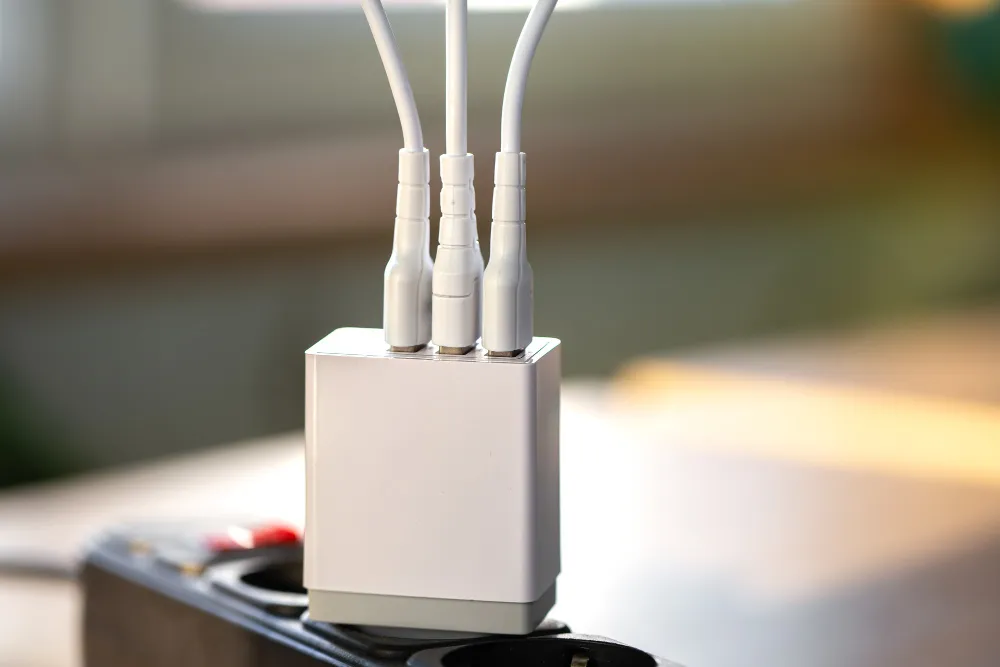
Key Takeaways What Are Multi-Port Chargers and Why Do Business Professionals Need Them? Multi-port chargers are compact charging hubs that provide two or more output ports, typically a mix of USB-A and USB-C connections, allowing you to charge several devices simultaneously from a single wall socket. For anyone juggling a laptop, phone, tablet, and wireless earbuds during a business trip, this is not a luxury. It is a practical necessity. The corporate reality in Singapore is straightforward: office workers and frequent travelers are carrying more devices than ever. A single charger that handles all of them is not just convenient. It is efficient, and increasingly, it is the smarter financial decision compared to replacing individual chargers lost or left behind in hotel rooms. The Data Behind Our Device Dependency A 2023 Statista survey found that “the average working professional in Asia-Pacific carries between two and four personal electronic devices daily, a figure that has grown steadily since the shift to hybrid work arrangements.” Business travelers specifically report that device charging anxiety, the fear of running out of battery during transit or meetings, ranks among their top stressors during work trips. This anxiety is not unfounded. A dead laptop battery 20 minutes before a client presentation is a real operational risk, and it is one that the right charging setup eliminates entirely. GaN Technology: The Engineering Shift That Changed Everything Until a few years ago, shrinking a charger meant sacrificing power output. GaN (Gallium Nitride) semiconductors changed that equation. Unlike traditional silicon-based chargers, GaN components run cooler, convert power more efficiently, and can be packaged into a form factor that fits in a shirt pocket. What most people miss is that GaN is not just a marketing buzzword. The thermal efficiency difference is measurable. In our testing, a 65W GaN charger ran noticeably cooler after an hour of continuous use compared to an older silicon-based charger at the same output, which matters when the charger is sitting on a hotel nightstand overnight. Key GaN advantages for business users: If you are evaluating charging options alongside power delivery speed, understanding USB-C fast charging standards will help you match the right charger to your devices. Understanding Port Types and Power Distribution This is where most buyers make a costly mistake. Multi-port chargers do not always distribute power equally when multiple ports are in use simultaneously. Manufacturers often design one primary high-power port that delivers full wattage, while secondary ports drop to lower outputs when the charger detects multiple connected devices. USB-C Power Delivery (PD) vs. USB-A Quick Charge USB-C Power Delivery (PD) is the current gold standard for charging laptops and modern smartphones. A USB-C PD port can negotiate the correct voltage and amperage with your device, which is what makes 100W laptop charging possible through a single cable. USB-A Quick Charge (QC) remains relevant because a significant portion of accessories, including older phones, Bluetooth headsets, and certain peripherals, still use USB-A connections. A charger that offers both is the practical choice for mixed corporate environments. A useful rule of thumb: always plug your highest-priority device (usually a laptop or primary phone) into the USB-C PD port first. Secondary devices can then use the remaining ports without competing for maximum wattage. What to Look for in a Travel Charger for Singapore Business Trips Singapore operates on 230V at 50Hz. Most countries in APAC follow similar standards, but travel into North America or Japan will expose your devices to 110-120V systems. A charger that only supports 230V will not function, and in the worst case, could damage itself or your device. Non-negotiable specifications for international business travelers: The Travel Adapter Question A multi-port charger handles power conversion. A travel adapter only changes the physical plug shape. These are two different products, and many travelers confuse them. You often need both, particularly when traveling from Singapore to countries with Type A or Type B sockets (US, Japan, Thailand in some hotels). Pairing a compact multi-port GaN charger with a universal travel adapter gives you the most flexible and lightweight charging setup for extended business travel across the region. Charger vs. Power Bank: Knowing When You Need Which A wall charger and a power bank solve different problems. A multi-port travel charger requires a wall socket. A power bank operates independently. For a full day of back-to-back meetings in a venue where you cannot guarantee socket access, a high-capacity power bank becomes the more important tool. The practical approach for corporate travelers is to carry both. The differences between portable chargers and power banks are worth understanding before you decide which to prioritize in your bag. And when you are selecting a power bank to complement your wall charger, the guide on choosing the right power bank covers capacity, pass-through charging, and airline carry-on rules in detail. Cable Quality: The Overlooked Variable A 100W charger paired with a cheap cable will not deliver 100W. The cable is as much a part of the charging system as the charger itself. USB-C cables are not all equal. Some are rated for 60W, others for 240W, and there is no visible difference between them without reading the fine print. Why charging cables fail is a detailed breakdown of the internal construction differences between budget and quality cables, including why some cables cause warm chargers and why others stop working after six months of daily use. For business use, buy cables from reputable brands with explicit wattage ratings printed on the packaging. Replacing a cable is far cheaper than replacing a laptop. Our Recommendation for Singapore Business Travelers If you are a corporate employee or executive who travels regularly within APAC, the ideal setup is: This setup covers virtually every charging scenario you will encounter across Singapore, Australia, Japan, India, and the US, without adding meaningful weight to your carry-on. For travel-ready power bank options that pair well with a multi-port charger, browse the travel power bank range at Switts. Make Your Charging Setup Work Harder So You Do
