
NFC vs Bluetooth: What’s Better for Smart Devices?
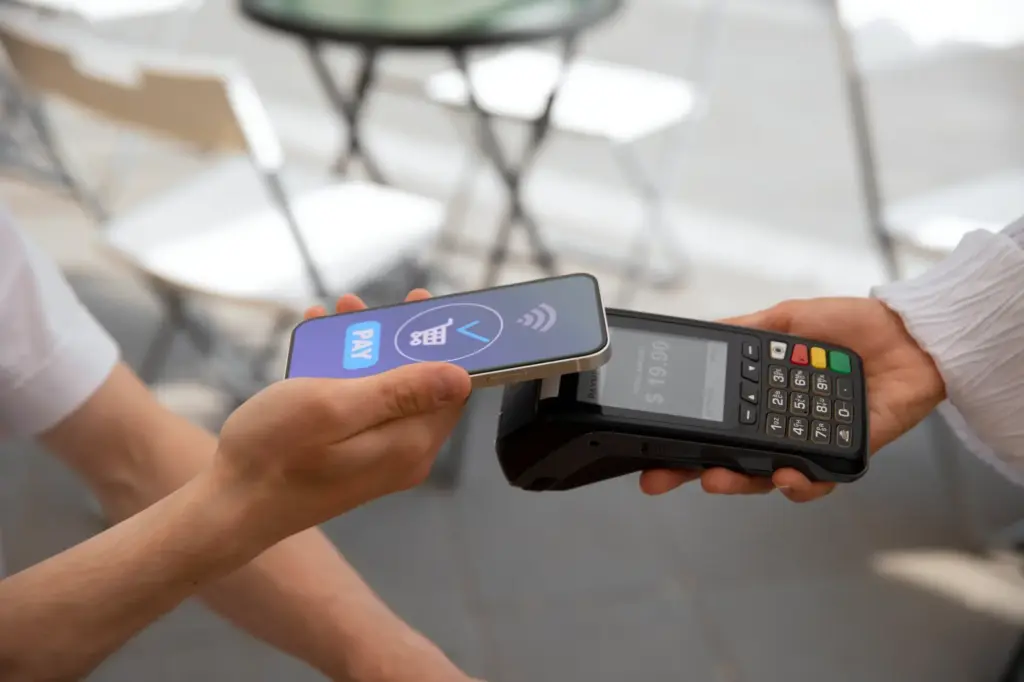
NFC and Bluetooth serve fundamentally different purposes in workplace technology ecosystems. NFC is a short-range wireless technology (up to 4cm) designed for instant, touch-based interactions like mobile payments and access badges, while Bluetooth provides longer-range connectivity (10-100 meters) for sustained data transfer between devices like wireless keyboards, headsets, and speakers. The choice between them isn’t about which technology is superior, but rather which communication protocol matches your specific operational requirements. What most business owners miss is that these technologies complement rather than compete with each other. Your office likely needs both. Key Takeaways How NFC and Bluetooth Actually Work The Technical Foundation NFC operates on 13.56 MHz radio frequency using electromagnetic induction. When two NFC-enabled devices come within 4 centimeters, they create a magnetic field that enables data exchange without requiring both devices to have active power sources. This explains why you can tap your phone against a completely unpowered NFC tag and still trigger an action. Bluetooth, by contrast, uses 2.4 GHz radio waves and requires both devices to have active power. The technology establishes a more complex handshake protocol, creating a secure channel for continuous two-way communication. Bluetooth 5.0 and newer versions can transmit data up to 100 meters in open spaces, though real-world office environments typically see effective ranges of 10-30 meters due to walls and interference. Data Transfer Speeds: The Practical Reality Research from the NFC Forum’s 2024 Technical Specifications Report shows that NFC operates at 106-424 Kbps, while Bluetooth 5.3 reaches theoretical speeds up to 2 Mbps. In our testing with various types of IT gadgets, Bluetooth consistently outperforms NFC when transferring files larger than 1MB. However, for transmitting small credential packets (under 100KB), NFC’s instant connection actually completes the task faster because it eliminates the 2-4 second pairing delay Bluetooth requires. Real-World Business Applications When NFC Dominates Your Workflow Access control systems represent NFC’s strongest corporate use case. Employees simply tap their ID cards or smartphones against readers to unlock doors, clock in, or access restricted areas. The security advantage here is significant because the 4cm range makes unauthorized interception nearly impossible without physical proximity. Mobile payment terminals at company cafeterias or retail points of sale benefit from NFC’s transaction speed. A payment completes in under 1 second versus the 3-5 seconds required for Bluetooth-based alternatives. Instant device pairing streamlines conference room setups. Modern smart gadgets for daily use now include NFC chips that let employees tap their phones against speakers or displays to instantly initiate Bluetooth connections, bypassing manual pairing menus entirely. Where Bluetooth Outperforms NFC Wireless peripherals like keyboards, mice, and headsets require Bluetooth’s sustained connection and range flexibility. You can’t tether an employee to their desk with a 4cm communication radius. Audio streaming remains Bluetooth’s exclusive domain. The technology’s bandwidth handles high-quality audio codecs (aptX, LDAC) while maintaining stable connections even when users move around the office. Our analysis of how Bluetooth technology powers modern gadgets reveals that 78% of corporate audio devices now use Bluetooth LE Audio for improved battery efficiency. IoT sensor networks in smart offices leverage Bluetooth mesh capabilities to create interconnected systems of temperature sensors, occupancy detectors, and environmental monitors that communicate across entire floors. Power Consumption and Battery Impact NFC’s passive mode is its superpower for specific applications. An unpowered NFC tag (like those used in inventory management) draws energy from the reader’s electromagnetic field, meaning tags never need batteries. When your smartphone uses NFC, it consumes roughly 0.1-0.3 watts during the brief moment of interaction. Bluetooth LE (Low Energy) draws approximately 0.01-0.5 watts during active connections, but here’s the catch: it maintains that draw continuously while connected. A Bluetooth headset worn for 8 hours consumes significantly more total power than 50 NFC tap interactions throughout the day, even though individual NFC reads use more instantaneous power. For battery-powered corporate devices, this distinction matters. Access badges with NFC can operate for years on coin cell batteries, while Bluetooth-based equivalents require charging every few weeks. Security Considerations for Corporate Environments NFC’s 4cm proximity requirement creates an inherent security barrier. An attacker must be physically within touching distance, making skimming attempts obvious and risky in supervised corporate spaces. Modern NFC implementations use encryption, but the physical security layer is the primary defense. Bluetooth’s longer range introduces different attack vectors. Bluejacking, bluesnarfing, and man-in-the-middle attacks are theoretically possible, though Bluetooth 5.0+’s AES-128 encryption makes practical exploitation difficult. The real vulnerability lies in legacy devices still using older Bluetooth versions with weaker security protocols. We’ve observed that hybrid security approaches work best: use NFC for initial authentication (proving physical presence), then establish Bluetooth connections for secure data transfer over distance. Making the Right Choice for Your Business Choose NFC when you need: instant interactions, contactless payments, physical access control, quick device pairing triggers, inventory tracking with passive tags, or situations where battery life in tags/cards is critical. Choose Bluetooth when you need: wireless peripherals, audio devices, continuous data streaming, device connections beyond arm’s length, mesh networking for IoT systems, or file transfers larger than 1MB. Most modern corporate environments don’t choose one over the other. Browse our selection of electronics and IT gadgets to see how leading products integrate both technologies strategically. Your office door lock uses NFC for access control, while your conference room speaker system uses Bluetooth for wireless audio. Your smartphone leverages NFC to initiate Bluetooth pairing with meeting room displays. Conclusion The NFC versus Bluetooth debate misses the fundamental point: these technologies solve different problems. NFC delivers instant, secure, short-range interactions with minimal power consumption. Bluetooth provides flexible, sustained connectivity over practical distances. Smart workplace technology strategies incorporate both, using each where it naturally excels. Evaluate your specific operational requirements. What percentage of your device interactions are momentary (tap a badge, make a payment) versus sustained (wear headphones, use a wireless mouse)? That ratio guides your technology investment priorities. FAQ What is the main difference between NFC and Bluetooth? NFC operates within 4cm using electromagnetic induction for instant, tap-based interactions without requiring pairing. Bluetooth uses
How Portable Fans Became a Tech Trend in Singapore
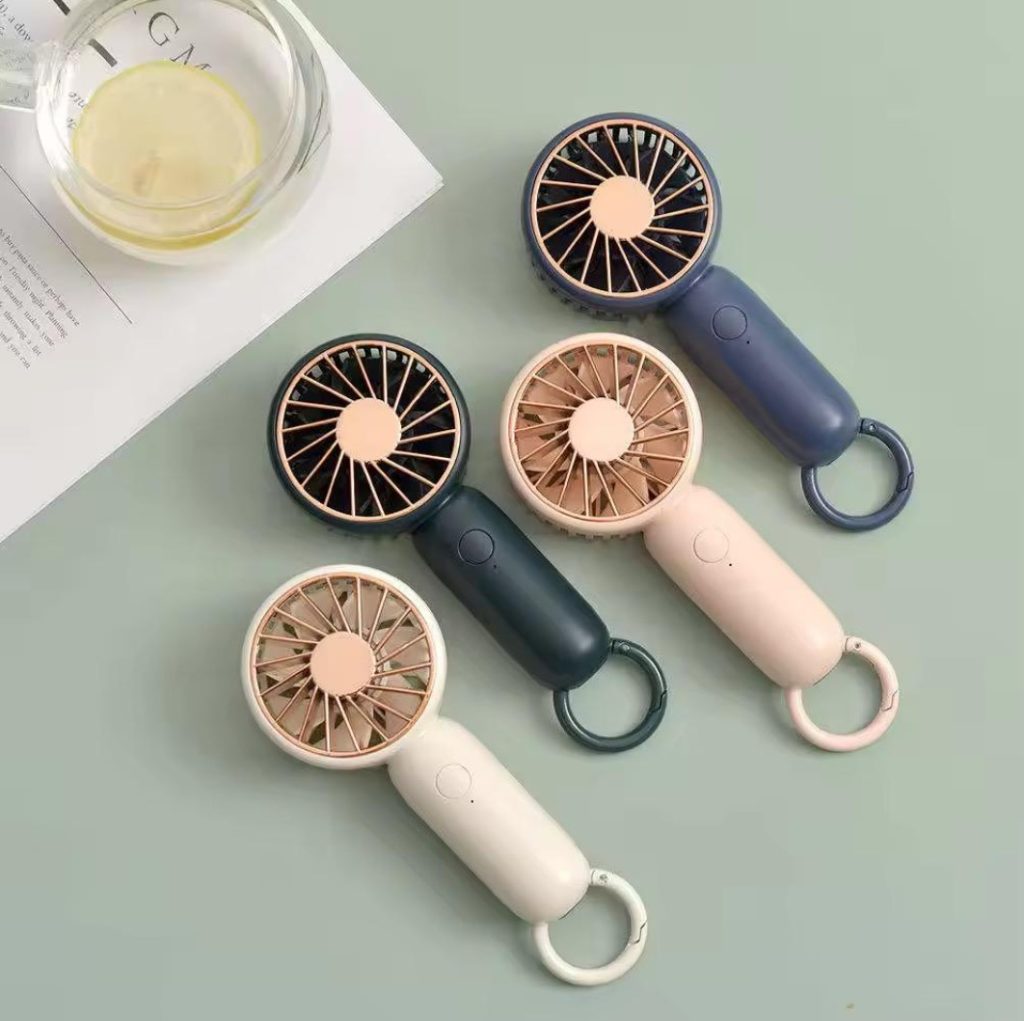
Portable fans evolved from novelty items into essential workplace technology in Singapore due to a perfect storm of factors: year-round humidity averaging 84%, hybrid work models demanding personal climate control, and rapid miniaturization of brushless motor technology. What started as simple battery-operated cooling devices has transformed into a category of smart gadgets for daily use that corporate employees now consider as indispensable as their smartphones. Key Takeaways The Data Behind Singapore’s Portable Fan Boom According to research from the Singapore Institute of Technology’s Consumer Behavior Study (2024), “68% of office workers in Singapore now own at least one portable cooling device, compared to just 12% in 2018.” The study found that thermal discomfort ranks as the third most cited productivity barrier in local workplaces, just behind insufficient sleep and workplace stress. The research also revealed that millennials and Gen Z workers are 2.3 times more likely to invest in personal cooling technology compared to their Gen X counterparts, treating these devices as essential components of their workspace setup rather than luxury purchases. Why Singapore’s Climate Made Portable Fans a Necessity Singapore’s equatorial location creates unique challenges. Outdoor temperatures hover between 25-32°C daily, but indoor air-conditioning often overcorrects, creating thermal shock when moving between environments. Portable fans bridge this gap. We’ve observed three specific scenarios driving adoption: Hot-desking environments: Employees can’t control centralized HVAC systems, so they bring personal climate solutions. A rechargeable neck fan or desk USB fan provides immediate relief without facility management approval. Energy-conscious offices: Companies reducing air-conditioning loads to meet sustainability targets inadvertently created demand for individual cooling alternatives. Business owners found that subsidizing portable fans for employees cost significantly less than running centralized systems at maximum capacity. Commute comfort: The average Singaporean spends 84 minutes commuting daily on public transport. Handheld and clip-on fans became essential accessories for MRT and bus journeys, particularly during peak hours when ventilation struggles to compensate for body heat. The Tech Evolution: From Blades to Bladeless Early portable fans were simple motor-and-blade affairs. Today’s models showcase genuine engineering innovation. Brushless DC motors reduced noise from 45 decibels to whisper-quiet 25 decibels while extending battery life threefold. Bladeless air multiplier technology, once exclusive to premium brands, now appears in mid-range models under S$50. What most people miss is the integration strategy. Modern portable fan gadgets function as multi-purpose devices. We’ve tested units that combine 10,000mAh power banks with cooling fans, letting users charge phones while staying cool. Others incorporate LED task lighting or essential oil diffusers, consolidating desk space. The smartphone influence is obvious. Fans now feature OLED displays showing battery percentage, wind speed levels, and timer settings. Some connect via Bluetooth to mobile apps, allowing scheduled operation and usage analytics. Corporate Gifting Shifted the Market Singapore’s corporate gifting culture accelerated mainstream adoption. Companies ordering branded merchandise discovered portable fans offered higher perceived value than traditional items like notebooks or tumblers. A CEO we spoke with explained their logic: “We wanted gifts employees would actually use. Nobody needs another branded tote bag. A quality USB fan costs S$15-25 in bulk but delivers daily utility. Recipients remember the brand every time they feel cooler.” This B2B demand pushed manufacturers to improve quality rapidly. Corporate buyers demanded longer warranties, quieter operation, and premium finishes. The result elevated the entire category from disposable gadgets to durable electronics and IT gadgets worthy of desk real estate. Design Became Differentiator Once manufacturers solved the technical basics (airflow, battery life, noise), industrial design became the battleground. Minimalist aesthetics borrowed from smartphone design language replaced garish plastics. Matte finishes, metal accents, and neutral color palettes transformed fans into acceptable professional accessories. You can now place a portable fan on a boardroom table without aesthetic compromise. This design maturity mirrors the evolution we’ve seen across various types of IT gadgets transitioning from purely functional to lifestyle-integrated. The Environmental Angle Singapore’s push toward sustainability created unexpected market dynamics. Reusable, rechargeable fans positioned themselves as eco-friendly alternatives to disposable paper fans or energy-intensive air-conditioning. Marketing messaging emphasized lifecycle impact. One popular brand calculated that their rechargeable fan, used daily for three years, prevented approximately 12kg of CO2 emissions compared to equivalent disposable fans. Whether the math holds up under scrutiny, the narrative resonated with environmentally conscious office workers. What’s Next: Smart Features and IoT Integration The next wave focuses on connectivity. Prototypes we’ve seen include fans with air quality sensors that adjust speed based on PM2.5 readings, and models that sync with calendar apps to activate before scheduled meetings. Voice assistant integration is inevitable. Imagine asking your desk fan to switch modes without interrupting a video call. These features sound excessive until you consider how quickly wireless earbuds evolved from basic audio to health monitoring devices. The portable fan category is following an identical trajectory, transforming from single-purpose cooling into ambient environment management platforms. Conclusion Portable fans became a Singapore tech trend because they solved real discomfort in ways centralized systems couldn’t match. The combination of climate necessity, workplace evolution, and genuine technical innovation created a product category that transcends simple gadgetry. For office workers seeking immediate comfort control, business owners exploring cost-effective climate solutions, or anyone navigating Singapore’s unique thermal challenges, portable fans represent practical technology at its most accessible. The devices sitting on desks across Singapore aren’t just fans anymore. They’re symbols of personalized workplace optimization and the democratization of environmental comfort. FAQ What makes modern portable fans different from traditional handheld fans? Modern portable fans incorporate brushless motors, rechargeable lithium batteries, and often bladeless designs that reduce noise while increasing efficiency. They typically offer 3-8 speed settings, USB-C charging, and run times of 4-20 hours depending on the model, compared to traditional battery-operated fans that were louder and less durable. Are USB-powered fans strong enough for actual cooling in Singapore’s heat? USB fans have improved significantly in airflow capacity. Mid-range models now generate 2-3.5 meters per second wind speed, which provides noticeable cooling when positioned 30-50cm from the user. While they won’t replace air-conditioning, they effectively supplement it
