
Why Battery Capacity Matters in Portable Gadgets
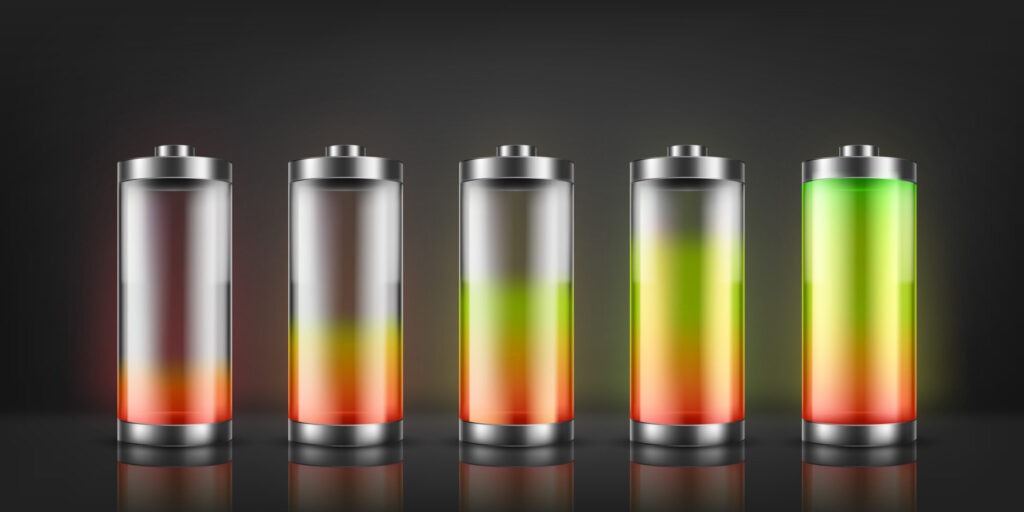
Battery capacity determines how many hours your portable gadgets can operate before requiring a recharge. For corporate employees juggling client meetings, international flights, and back-to-back video calls, running out of power at the wrong moment isn’t just inconvenient it’s a productivity killer. The mAh (milliampere-hour) rating stamped on your smartphone, laptop, or power bank tells you exactly how much electrical charge that battery can store, directly impacting whether your device survives a full workday or dies during your afternoon presentation. The difference between a 3,000 mAh phone battery and a 5,000 mAh alternative could mean the gap between making that critical business call from the airport or frantically searching for an outlet. Understanding what these numbers actually mean helps you make smarter purchasing decisions for your IT gadgets and avoid the false economy of buying cheaper devices that won’t last through your work demands. Key Takeaways What mAh Rating Actually Tells You About Runtime A 2023 study by Battery University found that battery capacity degradation accelerates significantly after the first 300-500 charge cycles, with most lithium-ion batteries losing 20-30% of their original capacity within two years of typical corporate use. This research underscores why your initial capacity choice matters more than most professionals realize. The mAh rating represents the battery’s storage capacity: a 10,000 mAh power bank theoretically delivers 10,000 milliamperes for one hour, or 1,000 milliamperes for ten hours. In practical terms, if your smartphone has a 3,000 mAh battery, that 10,000 mAh power bank should provide roughly 2-3 full charges (accounting for energy conversion losses of about 20-30%). Here’s what most people miss: mAh alone doesn’t determine how long your device actually lasts. A power-hungry processor, bright display, or constant 5G connectivity drains batteries faster regardless of capacity. We’ve observed that business professionals running multiple productivity apps, email sync, and GPS navigation simultaneously will exhaust a 4,000 mAh phone battery in 6-8 hours, while light users might stretch the same capacity across two days. The voltage component also matters. A 3.7V battery with 3,000 mAh stores different total energy (measured in watt-hours) compared to a 7.4V battery with the same mAh rating. For corporate purchasing decisions, always compare watt-hours (Wh) when evaluating different device types, but stick to mAh comparisons within the same product category. Why Corporate Professionals Need Higher Battery Capacity Business travel exposes the biggest gap between adequate and inadequate battery capacity. During our testing with frequent flyers, devices with less than 4,500 mAh batteries consistently required mid-day charging during 12-hour international flights with active work sessions. Power banks below 20,000 mAh couldn’t simultaneously charge a laptop and smartphone for professionals working remotely from airports or coffee shops. Field workers and sales teams face even harsher demands. GPS tracking, mobile payment processing, and continuous client communication drain batteries 40% faster than typical office usage. For these roles, 5,000+ mAh smartphones paired with 25,000+ mAh power banks become operational necessities rather than luxury purchases. Office-based employees can usually manage with moderate capacity devices since desk access to power outlets reduces recharge anxiety. However, meeting-heavy days—especially all-day workshops or conferences—still benefit from robust battery capacity. A CEO attending consecutive board meetings without device charging opportunities needs the same battery resilience as a traveling sales director. The calculation shifts when you factor in battery health degradation. That new 4,000 mAh phone performs beautifully for eighteen months, but by month twenty-four, effective capacity drops to 3,000-3,200 mAh. Starting with higher capacity provides a degradation buffer that extends your device’s useful corporate lifespan before requiring replacement. How to Evaluate Battery Capacity for Your Gadget Needs Match capacity to actual usage patterns, not perceived needs. Track your current device’s battery percentage at critical daily moments: after your commute, mid-afternoon, and before heading home. If you regularly hit 20% by 2 PM, you need roughly 30% more capacity than your current setup provides. For electronics and IT gadgets, consider these professional benchmarks: Smartphones: 4,000-5,000 mAh for heavy business users, 3,500-4,000 mAh for moderate office use, 5,000+ mAh for field professionals. Power Banks: 10,000 mAh provides 2-3 phone charges for emergency backup, 20,000 mAh handles phones plus tablets for day trips, 25,000+ mAh supports multi-device charging during extended travel. Wireless Earbuds: 40-50 mAh per earbud with 400-500 mAh charging cases delivers 4-6 hours of talk time, critical for professionals on constant conference calls. Laptops: 50-60 Wh for basic productivity (6-8 hours), 70-80 Wh for power users (8-10 hours), 90+ Wh for creative professionals and engineers. Fast charging technology also influences the capacity equation. A 4,000 mAh phone with 65W fast charging reaches 50% in 15 minutes, reducing the practical impact of smaller capacity compared to a 5,000 mAh device with standard 18W charging that requires 45 minutes for the same charge level. Battery Health: The Hidden Factor in Capacity Planning What starts as a robust 5,000 mAh battery won’t maintain that capacity forever. Lithium-ion batteries degrade through chemical processes accelerated by heat exposure, deep discharge cycles, and constant full charges to 100%. Corporate devices that sit plugged in all day or regularly drop to 0% lose capacity faster than those maintained in the 20-80% charge range. Temperature plays a bigger role than most professionals realize. Leaving devices in hot cars during summer or using them in direct sunlight while working outdoors accelerates battery degradation by up to 35% compared to climate-controlled environments. We’ve observed that field sales teams in tropical Singapore conditions replace devices 6-8 months earlier than office-based colleagues using identical hardware. You can extend effective battery life through smart charging habits: avoid leaving devices plugged in overnight, keep charges between 20-80% when possible, and use original or certified chargers that match your device’s power requirements. Understanding USB-C, Lightning, and Micro-USB differences helps prevent damage from incompatible charging accessories that stress batteries unnecessarily. Battery management systems in modern gadgets help by preventing dangerous overcharging, but they can’t eliminate natural capacity degradation. Budget for replacement power banks every 18-24 months and smartphones every 24-36 months if you depend on consistent all-day performance. Making
