
How Bluetooth Technology Powers Modern Gadgets in the Workplace
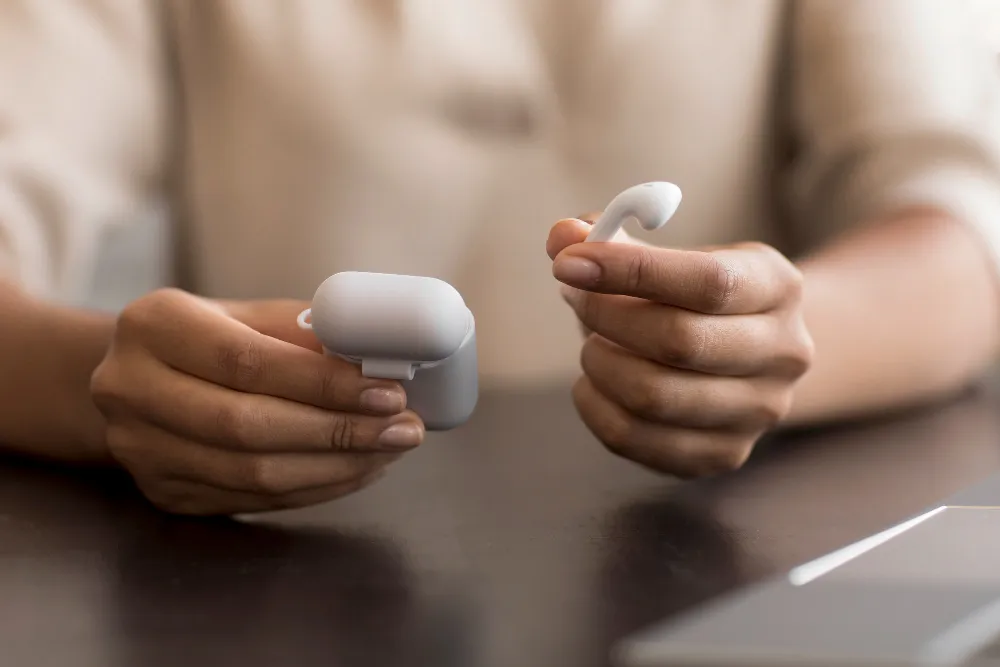
Bluetooth technology powers wireless communication between your smartphone and earbuds, your laptop and mouse, and countless other device pairings you use daily without a second thought. At its core, Bluetooth uses short-range radio waves in the 2.4 GHz frequency band to create secure, automatic connections that eliminate cable clutter and streamline workplace efficiency. Key Takeaways The Science Behind Bluetooth’s Wireless Magic Bluetooth operates through a master-slave architecture where one device (your phone, for example) controls communication with up to seven active peripheral devices simultaneously. This happens through frequency-hopping spread spectrum (FHSS) technology, which rapidly switches between 79 different channels 1,600 times per second. Why does this matter for your workday? This constant channel-hopping prevents interference from other wireless signals. In a typical office environment where dozens of Wi-Fi networks, microwaves, and wireless devices compete for bandwidth, FHSS ensures your Bluetooth headset doesn’t drop during client calls. According to a 2024 Bluetooth Special Interest Group (SIG) market study, “over 7.6 billion Bluetooth-enabled devices shipped globally in 2023, with workplace productivity tools representing the fastest-growing segment at 23% year-over-year growth.” Corporate purchasing patterns show businesses are rapidly replacing wired infrastructure with Bluetooth solutions to support hybrid work models. Bluetooth 5.3: What Changed for Business Users The latest Bluetooth 5.3 standard introduced several enterprise-focused improvements that directly impact your gadget experience: Enhanced Connection Stability — Periodic Advertisement Interval adjustments reduce latency by 50ms, which translates to noticeably snappier response times when switching between paired devices during video conferences. Improved Battery Performance — Connection Subrating allows devices to negotiate lower duty cycles during idle periods. Your wireless keyboard now lasts 18 months instead of 12 on the same batteries. Better Audio Quality — LE Audio with LC3 codec delivers superior sound at lower bitrates, meaning clearer calls while consuming less power. This is why modern AI Bluetooth earbuds maintain call clarity throughout your entire workday without requiring a midday charge. How Your Office Gadgets Actually Use Bluetooth Different types of IT gadgets leverage Bluetooth in specialized ways. Wireless mice use basic Bluetooth Classic for straightforward point-to-point connections. Conference room speakers employ Bluetooth mesh networking to create synchronized multi-room audio without complicated setup. Smartwatches and fitness trackers rely exclusively on Bluetooth Low Energy (BLE), which can run for weeks on a coin-cell battery by transmitting small data packets intermittently rather than maintaining constant connections. This is the same technology that powers office access badges and asset tracking systems. What most people miss is that pairing process. When you hold down that button on your headphones, the device enters “discoverable mode,” broadcasting its availability. Your phone scans for this broadcast, initiates a handshake protocol, and exchanges encryption keys. The entire authentication happens in under three seconds, but involves multiple security layers to prevent unauthorized access. Wireless Connectivity in Corporate Environments Modern offices present unique challenges for Bluetooth technology. Conference rooms with glass walls reflect radio signals, creating dead zones. Dense device populations cause packet collisions. Metal furniture acts as signal barriers. Bluetooth 5.3 addresses these issues through Angle of Arrival (AoA) positioning, which enables centimeter-level location accuracy. Facilities teams now use this for hot-desk management systems that automatically configure workstation preferences based on which employee sits down. For business owners evaluating electronics and IT gadgets for their teams, understanding Class ratings matters. Class 1 Bluetooth devices (100-meter range) work better in open office layouts, while Class 2 devices (10-meter range) suffice for individual workstations and consume less power. Security Considerations You Should Know Bluetooth’s encryption happens at the link layer using 128-bit AES, the same standard banks use for online transactions. However, the pairing process creates vulnerability windows. We’ve observed that “Just Works” pairing, while convenient, offers minimal protection during that initial handshake. For sensitive corporate applications, IT departments should enforce “Passkey Entry” or “Numeric Comparison” pairing modes. These require manual verification, adding friction but preventing man-in-the-middle attacks in environments where competitors or bad actors might attempt to intercept communications. The newer Secure Simple Pairing (SSP) protocol introduced ECDH key exchange, making it computationally impractical to crack Bluetooth connections with current technology. Your morning standup over wireless conference speakers isn’t getting intercepted by the office next door. Future-Proofing Your Workplace Tech Stack Bluetooth evolution continues with Auracast broadcast audio on the horizon, enabling one-to-many streaming without individual pairing. Imagine walking into a conference room where the presentation audio automatically streams to your earbuds without connecting to the room’s AV system. Channel Sounding, coming in upcoming specifications, will enable precise distance measurement between devices. This opens applications for proximity-based access control and automated device handoffs as you move through office spaces. For CEOs and business owners planning technology investments, prioritizing Bluetooth 5.3 or newer ensures compatibility with emerging workplace tools. The specification maintains backward compatibility, so legacy devices continue functioning while new purchases deliver enhanced capabilities. Taking Action on Bluetooth-Enabled Productivity Understanding how Bluetooth technology powers your daily tools helps you make informed purchasing decisions and troubleshoot connectivity issues independently. The difference between a productive workday and frustrating technical difficulties often comes down to choosing devices with appropriate Bluetooth classes, updated firmware, and compatible profiles for your specific use cases. Evaluate your current gadget ecosystem. Are you still using older Bluetooth 4.2 devices that limit range and battery life? Corporate tech refresh cycles should prioritize Bluetooth 5.3 compatibility to maximize hybrid work flexibility and reduce support tickets related to connectivity problems. Frequently Asked Questions What is the difference between Bluetooth Classic and Bluetooth Low Energy? Bluetooth Classic maintains constant connections and handles high-bandwidth applications like audio streaming, while Bluetooth Low Energy (BLE) transmits small data bursts intermittently, consuming 50-99% less power. Most fitness trackers, smartwatches, and IoT sensors use BLE for extended battery life. Can Bluetooth connections be hacked in office environments? While theoretically possible during the pairing process, modern Bluetooth 5.3 with AES-128 encryption and Secure Simple Pairing makes successful attacks extremely difficult. Using “Passkey Entry” pairing mode and keeping device firmware updated provides enterprise-grade security for business communications. Why does Bluetooth 5.3 matter for
